
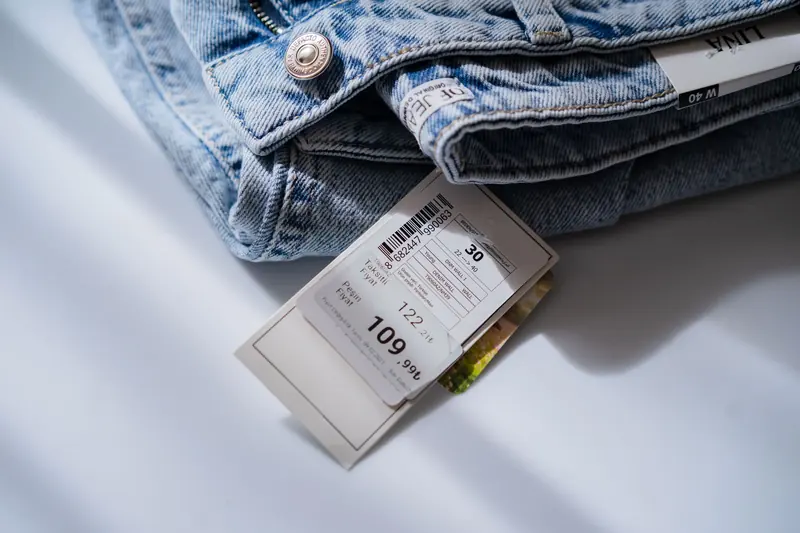
The origin marking obligation and what the importer must do
If the first 4 digits of the HS code of imported goods are listed in Annex 8 of the Foreign Trade Management Regulation, the goods must bear a country of origin marking, and the head of customs does not allow clearance of goods with no marking or with a marking made by a method other than the prescribed one (Customs Act, Article 230). The principle is marking at the manufacturing stage by printing, stitching or similar means, so the importer first checks by tariff classification whether the goods are subject to marking and, if so, asks the exporter before shipment to mark the goods themselves.
A person who intends to import goods subject to origin marking must mark the origin on the goods (Foreign Trade Act, Article 33 (1)). The goods concerned are listed in Annex 8 of the Foreign Trade Management Regulation by HS 4-digit tariff code, and the marking wording, location and method are set by the same Regulation and the Korea Customs Service Notice on the Operation of the Country of Origin Marking System (hereinafter the Notice).
The certificate of origin submitted to receive the FTA preferential tariff rate is a separate system (Applying the FTA preferential tariff rate).
Checking whether the goods are subject to marking
Article 75 (1) of the Foreign Trade Management Regulation defines goods subject to origin marking as "imported goods listed in Annex 8." Annex 8 lists HS 4-digit tariff codes by chapter, so if the first 4 digits of the HS code of the imported goods are in Annex 8, the goods are subject to marking.
Even within the same chapter, some goods are subject and others are not, and some codes are narrowed in scope, as in "0106 (limited to turtles)" and "5909 (limited to fire hoses)."
| HS 4-digit | Example goods | Subject to marking | Marking method in Annex 3 of the Notice |
|---|---|---|---|
| 6109 | T-shirts (knitted fabric) | Subject | Origin marking on a sewn-in label on the goods |
| 4202 | Bags, wallets | Subject | Origin marking on a sewn-in label on the goods (other methods allowed where sewing a label is not possible) |
| 9617 | Vacuum flasks, insulated lunch boxes | Subject | Origin marking on the goods |
| 3304 | Cosmetics | Subject | Origin marking on the retail minimum package |
| 7318 | Screws, bolts, nuts, rivets | Subject | Origin marking on the minimum package |
| 3901 | Polymers of ethylene (primary forms) | Not subject | Not applicable |
For goods subject to marking that are not in Annex 3 of the Notice, mark them by a method that suits the origin marking principles, taking into account the characteristics of the goods (general principles in Annex 3 of the Notice). Whether the goods are subject to marking is settled only once the HS code is determined, so for goods you are importing for the first time, check the tariff classification first.
Marking wording
The origin of imported goods may be marked in Korean, Chinese characters or English, in one of the following forms (Foreign Trade Management Regulation, Article 76 (1)).
- "Origin: [country name]", "[country name] origin", "[country name] made"
- "Made in [country name]", "Product of [country name]"
- "Made by [manufacturer's company name, address, country name]"
- "Country of Origin : [country name]"
If the goods are too small to be marked in these forms, only the country name may be marked (Article 76-2 (1)). Supplementary markings such as "Designed in [country name]" and "Licensed by [country name]" may be used only together with the origin marking above, so that the origin is not likely to be misunderstood (same Article (2)). The Notice gives as examples of improper marking a region or community that is not a country, as in "Made in EU", and an abbreviation not commonly used, such as "P.R.C" or "JPN" (Annex 9 of the Notice).
Marking location and method
The origin must be marked in a typeface large enough for the final purchaser to read easily, in a place where it can be found in the normal course of purchase, and must not be easily erased or detached (Article 76 (2) to (4)). The principle is to mark at the manufacturing stage by printing, mimeographing, branding, casting, etching, stitching or a similar method (Article 76 (5), main text).
Stamping, labels, stickers and tags may be used where the principle method is unsuitable or difficult given the characteristics of the goods, or where it may damage the goods (Article 76 (5), proviso). The Notice gives the following as examples where an exceptional method may be recognized (Notice, Article 5 (1), Annex 2).
- Home appliances such as computers, telephones, calculators and TVs: a sticker with a coated top surface
- Textile products such as clothing, bags and shoes: a label sewn on with fabric
- Micro-sized precision ornaments such as necklaces and earrings with no space for marking: a double-sided adhesive sticker or tag
- Goods sold in sealed packaging, such as soap, toothbrushes, razor blades and batteries, where the head of customs approves: origin marking on the package
Marking on the underside of a fan or small speaker or on the inside pocket of a bag, marking with a sticker that comes off easily or a sticker showing only the origin, and printing with ink that rubs off are examples of improper marking (Annex 9 of the Notice). A country of manufacture stated in the labeling required by other laws is recognized as an origin marking only if it is the same as the origin under the foreign trade laws and regulations (Notice, Article 5 (2)).
When the minimum package may be marked instead of the goods
The principle is that goods subject to origin marking are marked on the goods themselves, and in any of the following cases the marking may be made on the minimum package, container or similar instead of the goods (Foreign Trade Management Regulation, Article 75 (2)).
- Where it is impossible to mark the origin on the goods
- Where the marking would seriously damage the goods (billiard balls, contact lenses, unpackaged integrated circuits, etc.)
- Where the marking would substantially lower the value of the goods
- Where the marking is so excessive that it would prevent the import, such as when the marking cost is higher than the price of the goods
- Goods that, by commercial practice, are sealed in packaging or containers or are sold to the final purchaser without the package being opened (soap, toothbrushes, sealed medicines, etc.)
- Where parts and raw materials to be put into a manufacturing process that causes substantial transformation are supplied directly to the actual user after import
- Where the appearance makes it unlikely that the origin is misunderstood, as with fruits and vegetables such as durian, oranges and bananas
- Goods that the Commissioner of the Korea Customs Service recognizes as appropriate after consulting the Minister of Trade, Industry and Energy
The marking on the retail minimum package permitted by Annex 3 of the Notice also applies only to goods falling under these 8 cases. When goods marked on the goods or the minimum package are sold in packaging units, the sales package must also be marked, and the marking on the sales package may be omitted if the consumer can check the origin on the goods or the minimum package as it is (Notice, Article 4 (4)). Marking only on the packing box when the goods themselves must be marked is an example of no marking (Annex 10 of the Notice).
Goods likely to cause misunderstanding of origin
For goods produced by original equipment manufacturing (OEM) where the origin and the country of the orderer differ, and goods on which a company name, trademark, region, country or language name different from the origin is conspicuously displayed on the goods or packaging, the origin must be marked on the front of the goods or the packaging or container (Foreign Trade Management Regulation, Article 77 (1) and (2)). A person who sells these goods must, when selling or displaying them, mark the origin with a sticker, sign or similar separately from the origin marked on the product (same Article (3)).
Goods that need not be marked
Even goods subject to origin marking need not be marked in the following cases (Foreign Trade Management Regulation, Article 82 (1)).
- Goods imported as raw materials and facilities for foreign currency earnings
- Consigned goods, separately sent goods and traveler's baggage sent to an individual free of charge
- Parts and raw materials to be put into a manufacturing process that causes substantial transformation after import, imported directly by the actual user (including import by an agent)
- Goods not provided for sale or rental, imported directly by the actual user
- Goods for research and development imported by the actual user (including import by an agent)
- Samples not for display or sale, and goods for defect repair imported directly to repair a defect in imported goods themselves
- Goods in transit that merely pass through Korea by bonded transport, transshipment or similar
- Goods imported temporarily, such as goods eligible for exemption on condition of re-export
- Goods re-imported after export from Korea
- Goods eligible for diplomatic exemption
- Goods imported by an individual for personal consumption that the head of customs finds appropriate
- Other goods that the Commissioner of the Korea Customs Service recognizes as appropriate after consulting the Minister of Trade, Industry and Energy
The head of customs may also exempt from origin marking donated goods for charitable rather than sales purposes, goods produced 20 years or more before import, and goods printed with the importer's company name or trademark and used for display only (Notice, Article 8 (1)). For exempted goods, the head of customs may check afterward whether the exemption was appropriate, for example whether the goods were used for another purpose (Article 82 (2)).
Pre-import confirmation and measures at clearance
Before the import declaration, you may ask the Commissioner of the Korea Customs Service for advance confirmation of the origin marking method. If you submit an application and a sample (a photo or catalog if a sample is difficult to submit), the Commissioner replies within 14 days of receipt, and customs officials must recognize as proper the marking of imported goods that matches the registered marking method (Notice, Article 41).
For goods with no marking or incorrect marking, before the import declaration you may carry out origin marking remedial work in a bonded area with the approval of the head of customs, who notifies whether the application is approved within 10 days of receiving it (Customs Act, Article 158; Notice, Article 31). If the violation is found after the import declaration, the head of customs may have the marking supplemented or corrected according to the origin marking method and then allow clearance, except where intent such as false marking is found (Customs Act, Article 230; Notice, Article 29 (2)). For violations found after clearance, the Minister of Trade, Industry and Energy or the Mayor or Governor may order corrective measures such as suspension of sales and restoration to the original state, or impose a penalty surcharge of up to KRW 300,000,000, and acts such as falsely marking or not marking the origin are subject to imprisonment of up to 5 years or a fine of up to KRW 100,000,000 (Foreign Trade Act, Articles 33-2 and 53-2).
Source: Foreign Trade Act, Article 33 (Marking of origin of imported and exported goods, etc.), Article 33-2 (Corrective orders for violations of origin marking, etc.), Article 53-2 (Penalties), Enforcement Decree of the Foreign Trade Act, Article 56 (Origin marking method for imported and exported goods), Customs Act, Article 158 (Remedial work), Article 230 (Restriction on clearance of goods with false origin marking, etc.), Foreign Trade Management Regulation Article 75 (Goods subject to origin marking among imported goods, etc.), Article 76 (General principles of origin marking of imported goods), Article 76-2 (Exceptions to origin marking of imported goods, etc.), Article 77 (Origin marking of imported goods likely to cause misunderstanding of origin), Article 82 (Exemption from origin marking of imported goods), Annex 8 (Goods subject to origin marking), Notice on the Operation of the Country of Origin Marking System Article 4 (Principal origin marking method), Article 5 (Exceptional origin marking method), Article 8 (Exemption from origin marking), Article 29 (Restriction on clearance of goods violating origin marking), Article 31 (Origin marking remedial work), Article 41 (Advance confirmation of origin marking method), Annex 2 (Examples where an exceptional origin marking method may be allowed), Annex 3 (Proper origin marking method by goods), Annex 9 (Examples of improper origin marking), Annex 10 (Examples of no origin marking). Confirmed on October 16, 2026, based on the Foreign Trade Act in force on January 2, 2026, the Customs Act in force on October 2, 2026, the Foreign Trade Management Regulation in force on March 8, 2024, and the Notice in force on November 24, 2025.