

Origin verification procedure
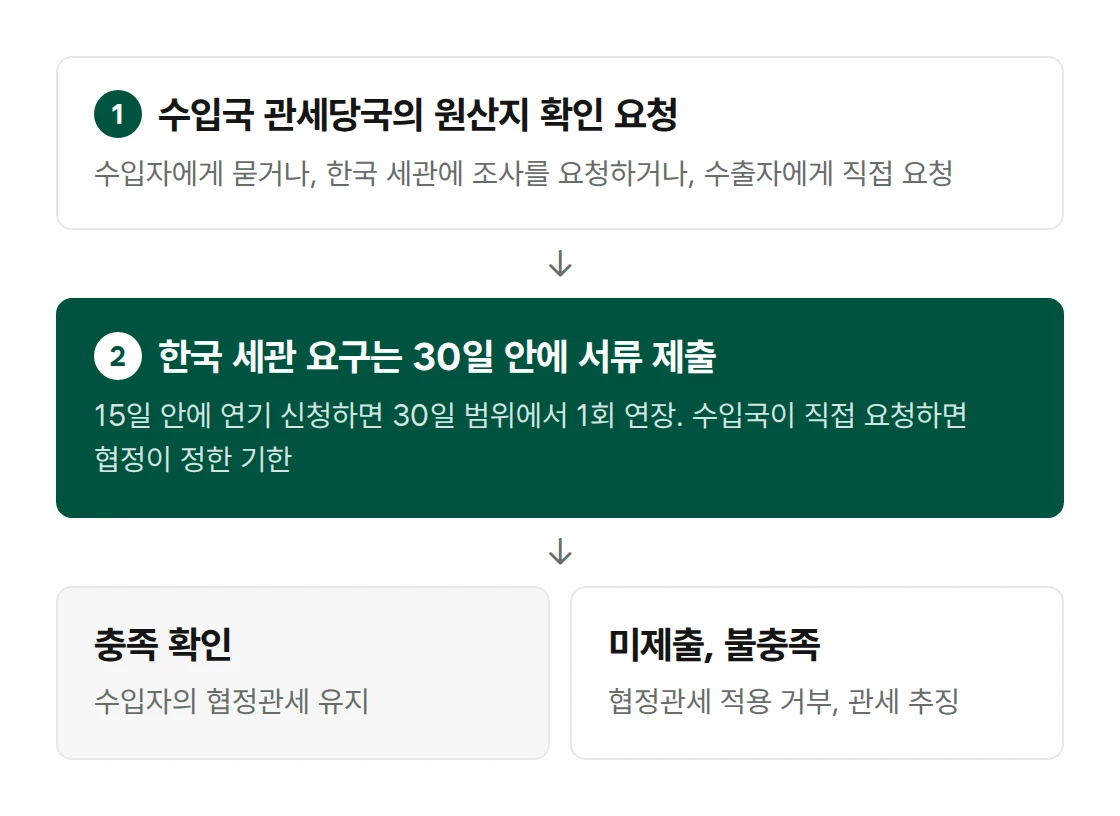
Origin verification is a procedure in which the customs authority of the importing country confirms whether the imported goods are originating goods under the agreement. The importing country asks Korean customs to investigate or asks the exporter directly for documents, and if the exporter cannot prove origin within the deadline, the importer's FTA preferential tariff may be denied.
Documents to submit
The documents to submit depend on the origin criterion stated on the certificate of origin.
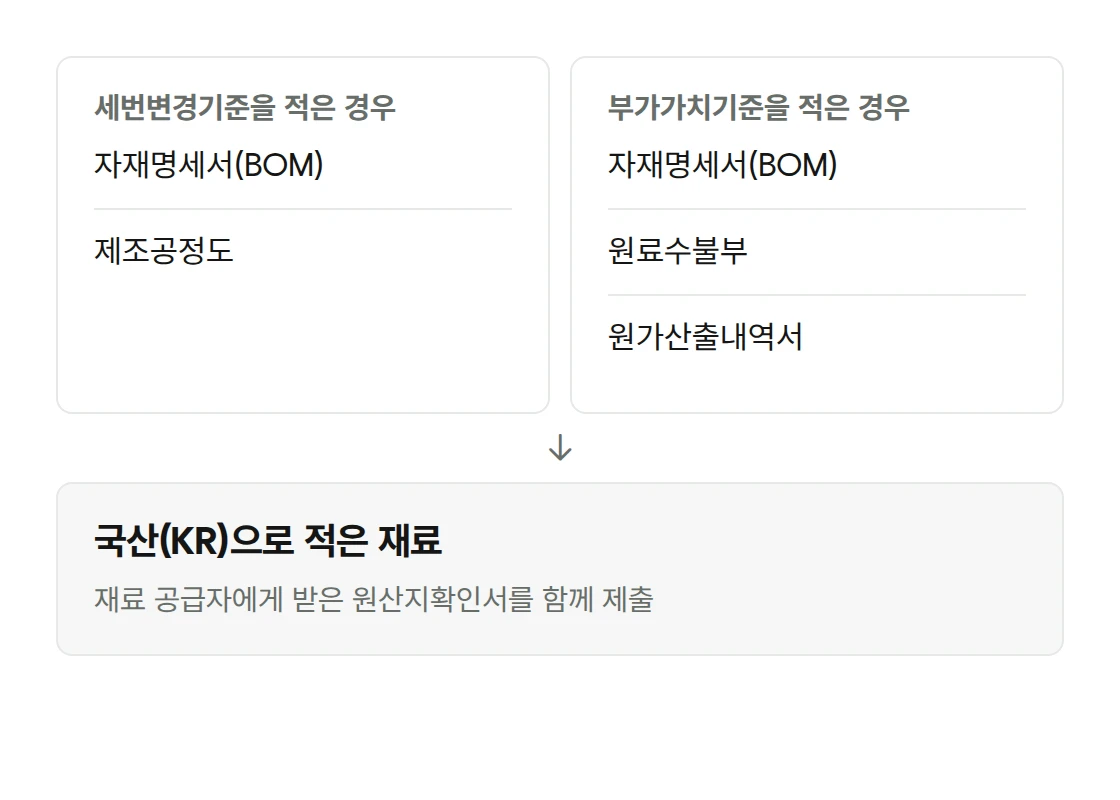
These are documents you create when preparing the certificate of origin and keep for 5 years. How to prepare and keep them is explained in How to prepare a self-issued FTA certificate of origin: preparing and keeping the bill of materials and manufacturing flow chart.
Submission deadlines
- If Korean customs requests, submit within 30 days of the date of the request. If there is an unavoidable reason, you can apply for a postponement within 15 days and receive one extension within a 30-day range.
- If the customs authority of the importing country requests directly, the deadline set by the agreement applies. For example, under the Korea-Australia FTA, you respond in English within 30 days of the request date, and within the same period you may request in writing an extension of up to 30 days.
- If the importing country requests a visit to the business site, respond in writing within the period set by the agreement on whether you consent. If you do not consent, the FTA preferential tariff may be denied.
The proceedings in the importing country that dispute whether the FTA preferential tariff applies are conducted by the importer and its local customs representative. The exporter submits the requested documents within the deadline.
When the certificate of origin you prepared has an error
If you learn that the origin details contain an error, notify the head of customs and the importer separately within 30 days of learning of it. If you give notice of the correction, you are excluded from the fine (up to KRW 3,000,000) for negligently preparing the certificate contrary to the facts.
If you receive a verification request or your documents are insufficient, a Licensed Customs Broker can review the documents before you submit them (Origin certification services).
Related articles
- How to prepare a self-issued FTA certificate of origin: preparing and keeping the bill of materials and manufacturing flow chart
- FTA certificate of origin issuance methods: authority-issued and self-issued by agreement
Source: Act on Special Cases of the Customs Act for the Implementation of Free Trade Agreements Article 14 (Notice of Correction of Origin Proof Documents), Article 16 (Submission of Origin Proof Documents, etc.), Article 18 (Origin Investigation at the Request of the Contracting Party), Article 44 (Penalties), Enforcement Rule of the same Act Article 19 (Period for Notice of Correction of Origin Errors in Export Goods, etc.), Article 21 (Persons Who Submit Data and Deadline for Submission), Notice on Procedures under the Act on Special Cases of the Customs Act for the Implementation of Free Trade Agreements Article 27 (Documents Proving the Origin Explanatory Statement), Free Trade Agreement between the Government of the Republic of Korea and the Government of Australia (Treaty No. 2215) Article 3.23 (Verification of Origin), Article 3.24 (Verification Visit), Article 3.25 (Denial of Preferential Tariff Treatment). Confirmed on October 22, 2026. As in force on October 1, 2025 for the Act, May 1, 2026 for the Enforcement Rule, and June 30, 2026 for the Notice.